

Related news and updates

Don't panic: how stakeholder response patterns predict retail crises and the impact of retailer reactions
Associate Dean Koen Pauwels' latest research examines why some negative retail incidents fade quickly while others escalate into crises. Analyzing 510 incidents, the study finds that patterns in stakeholder reactions, not the amount of attention an incident receives, are key to predicting financial impact.

Is the “work from home” era over in Boston? Here's why companies want employees back in the office.
Jayanth Narayanan says that some return-to-office mandates may be an attempt to avoid layoffs.

AI Fatigue: The Hidden Challenge in the Race for AI Adoption
Perhaps it's unsurprising that even AI enthusiasts have begun to experience a certain weariness with it all.

How to Master the Art of Negotiation with Edward Wertheim, Northeastern Professor
Most executives admit they leave money on the table. Edward Wertheim has spent decades teaching them why.

Are you overburdening your most engaged employees?
Managers give more work to employees they perceive as being more intrinsically motivated under a “naive belief.”

DMSB Day continues to bridge research and real-world impact
Faculty, staff, corporate partners, and alumni gathered for an engaging and successful afternoon of learning and networking. Congratulations to the top pitchers selected by our 16 esteemed judges: Kwong Chan, Curtis Odom, Jen Guillemin, and Michelle Zaaf.

From a red paperclip to real-world success: How a D'Amore-McKim course shapes tomorrow's leaders
D'Amore-McKim School of Business professor Sarah Woodside, recipient of the Teaching Innovation and Excellence award, teaches students to navigate real-world business complexities through hands-on experiences.
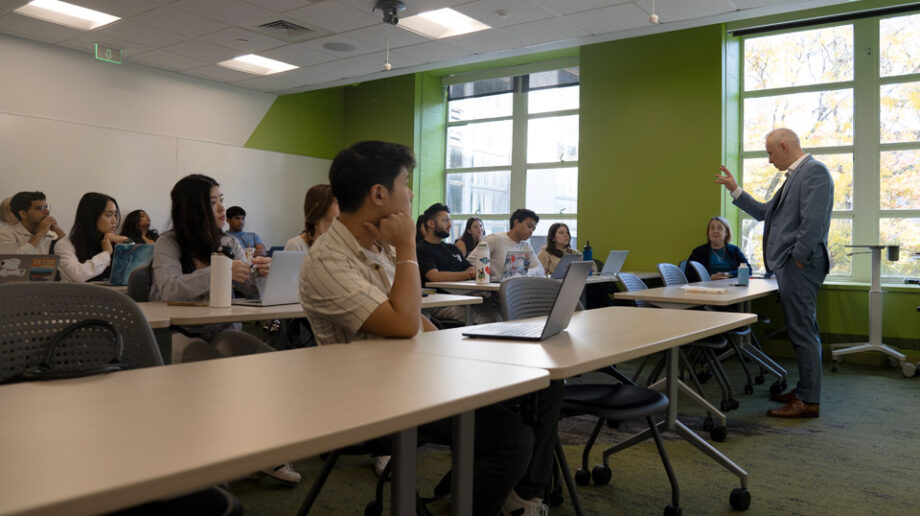
Exploring the behavioral side of digital transformation
‘How technology influences behavior, and how behavior influences technology' is the mantra for D'Amore-McKim's newest management course.

Research.com recognizes D'Amore-McKim professors for groundbreaking contributions across disciplines
D'Amore-McKim professors have been recognized in Research.com's latest rankings across several disciplines, including Business and Management. This recognition highlights their significant contributions to advancing academic knowledge and shaping real-world business practices.