

Updated: June 17, 2026
Every successful business begins with a simple question: What if this worked? Turning that question into a viable venture takes more than a strong idea, especially if you're figuring out how to become an entrepreneur for the first time. It requires strategy, resilience, and a clear understanding of how to move from concept to execution.
At Northeastern University's D'Amore-McKim School of Business, aspiring entrepreneurs like you gain the tools and experience to make that transition with confidence. Let's dive into everything you need to know about how to become an entrepreneur, from essential skills you should add to your professional toolkit to the first steps in launching your business.
What does it take to be an entrepreneur?
Entrepreneurs are visionaries who drive change, create jobs, and spark innovation. Success requires an entrepreneurial mindset. This means embracing risk, learning from failure, adapting quickly, and staying rooted in your “why.” Understanding what does it take to be an entrepreneur means developing a strong foundation in resilience, problem-solving skills, and the ability to spot market opportunities.
If you're wondering how to become an entrepreneur without a traditional background, rest assured that entrepreneurs come from all walks of life. Start by taking inventory of your strengths and identifying which areas may need improvement. From there, you can build the skills that support your goals. Graduate business programs, like those at D'Amore-McKim, combine business acumen with practical application. You'll master skills in:

Through rigorous coursework and experiential learning opportunities such as venture accelerators, projects with startups, and mentorship programs, you'll gain hands‑on experience that transforms knowledge into a viable business venture.
Building your path: Steps to becoming an entrepreneur
While every journey looks different, understanding the general steps to becoming an entrepreneur can help you move forward with more clarity and confidence. An entrepreneurial career typically starts with a great idea, but how do you know if an idea is viable? One of the most important early steps to becoming an entrepreneur is validating your idea with real customers:

After understanding the initial steps to becoming an entrepreneur, the next phase is turning your idea into a structured plan. Entrepreneurial innovation typically starts by solving a problem that already exists. Your plan should outline how you'll accomplish that by addressing these factors:
| Marketing and Sales | How you will retain and attract customers |
| Operations | How you will deliver the product |
| Human Resources | What talent do you need to hire |
| Technology | The systems and tools you'll need to support growth |
| Finances | How you plan to acquire funding and pitch to investors |
Consider these factors before launching your startup
Launching your startup requires more than a strong idea. You need a solid foundation to support long-term growth and help you navigate challenges early on. Focusing on a few key areas before you launch can make the difference between a concept that stalls and one that gains traction.
Nail down your legal requirements
Make sure your business is set up properly from the start. This includes obtaining any necessary permits, licenses, business registrations, and insurance to ensure your launch is as smooth as possible.
Build for scalability
Think beyond day one. Ensure that your business can grow efficiently by creating systems and processes that can track and react to changes in demand. You're about to launch your venture in an ever-changing business world, so consider these factors:

Understand your customer
Meet your customers where they're at and begin marketing in the places they already spend time. Prioritize the channels they use most, whether that's social media, online communities, or industry networks, and invest in strategies that are both targeted and cost-effective, such as partnerships and organic outreach.
Perfect your pitch
A compelling, well-practiced pitch is essential. It helps you communicate your value to investors, attract partners, and open doors to new opportunities. Keep in mind that your pitches should fit into a natural, organic conversation. It's not a monologue and doesn't need to be memorized word for word.
Strengthen your business foundation
A graduate business degree can be a game-changer. At D'Amore-McKim, graduate degrees like the MS in Management or MBA with an entrepreneurship concentration connect you with mentors, peers, and real-world opportunities to test ideas, pitch investors, and scale your business with confidence.
Which funding options are best for aspiring entrepreneurs?
Securing funding is a critical step in launching a startup and a key milestone in learning how to become an entrepreneur. Before reaching out to investors, you'll need realistic financial projections that outline how much capital your business needs and how it will be used. From there, you'll craft a compelling pitch that effectively communicates the value, growth potential, and profitability of your business idea.
Typical funding stages and options include:
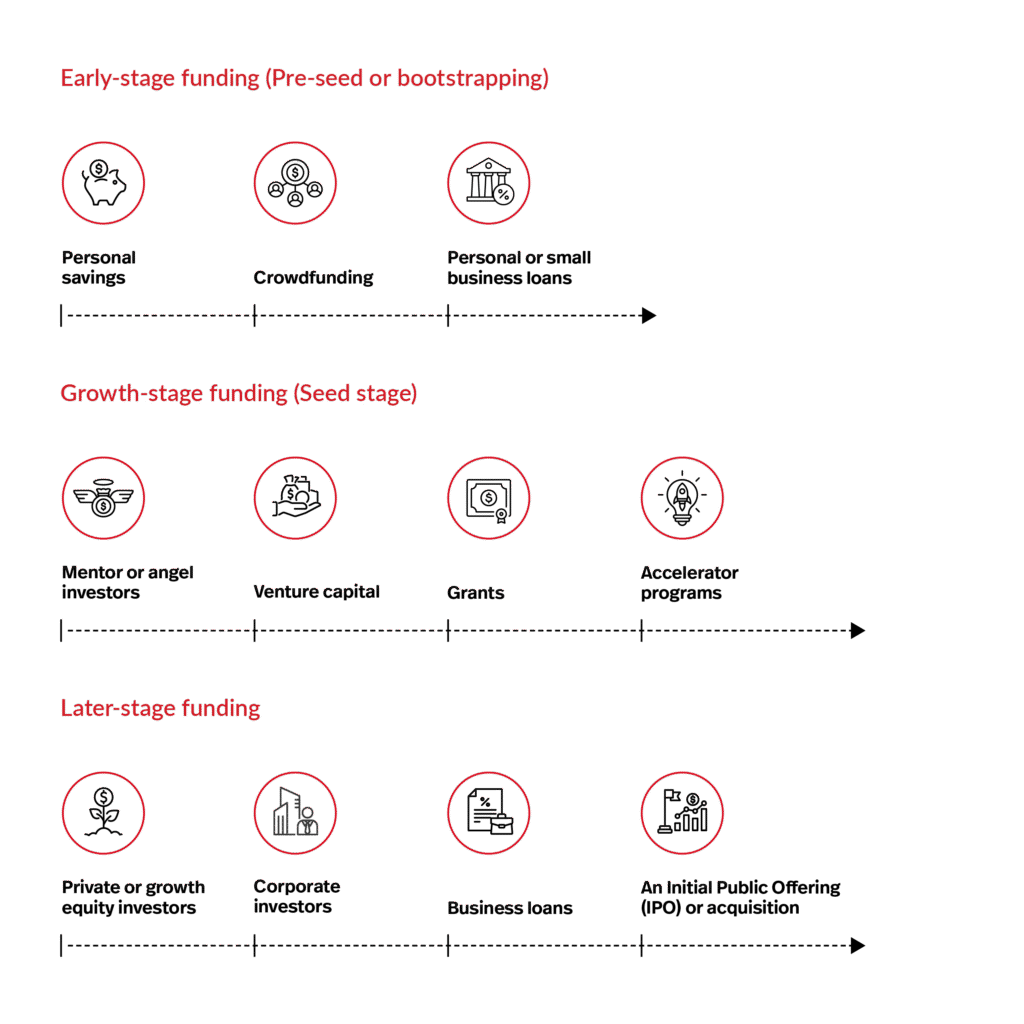
Each of these funding paths offers unique advantages, but keep in mind that they each come with their own trade-offs, timelines, and expectations. Choosing the right mix depends on your goals, your growth stage, and how you want to build your business.
Invest in yourself with D'Amore-McKim
One of the most valuable investments you can make as an entrepreneur is in your own growth. Expanding your knowledge and sharpening your skills can help you move from idea to execution with more confidence and clarity. For many aspiring founders exploring how to become an entrepreneur, a graduate degree is that natural next step.
At D'Amore-McKim, you gain more than just a degree. You'll gain the skills, connections, and real-world experience that shape your pathway to success. Explore programs designed to help you develop and test your ideas while strengthening your business acumen:

Full-Time MBA

Part-Time MBA

Management

Entrepreneurship

Entrepreneurship
My coursework at D'Amore-McKim gave me a strong foundation in business and entrepreneurship. I learned essential theories and practical frameworks, and professors provided real-world insights that helped me apply these concepts to structuring a business, creating investor decks, and preparing for pitches.
Dani Zheng, MS in International Management'24
Learning extends beyond the classroom through experiential opportunities that put classroom theory into hands-on practice. Through IDEA, Northeastern's student-led venture accelerator, you can access support across every stage of venture development, from business plan creation to prototype funding.
You'll also get connected to The McCarthy(s) Venture Mentorship Network, a powerful resource that pairs Northeastern entrepreneurs with experienced, high-level mentors. They'll help you navigate challenges and give you the guidance you need to take your venture to its full potential.
After two years in the workforce, I knew I wanted to be in the business world and build the skills to become an entrepreneur. Earning an MBA felt like a natural step for me to gain the education, network, and foundational business acumen to succeed in my career as an entrepreneur.
Comus Hardman, MBA'22
Ready to take the next step?
So, what does it take to be an entrepreneur? D'Amore-McKim's programs equip you with everything needed to launch your very own business venture.
Explore our graduate programs and sign up for an upcoming event to connect with faculty, current students, and future mentors. Step into your entrepreneurial role today!
Key takeaways:
- Entrepreneurs imagine, create, and launch ventures. They are bold problem-solvers who spot opportunities, embrace risk, and transform ideas into businesses.
- How to become an entrepreneur starts with a clear plan. Validate your business idea, map out your strategy, secure funding, scale operations, and keep developing your skills along the way.
- Choosing the right graduate program can accelerate your entrepreneurial success. Experience-powered learning, expert mentorship, and venture accelerator access from the D'Amore-McKim School of Business will help you master the essential steps to becoming an entrepreneur with confidence.
Explore Related Articles


Upcoming Admissions events
Graduate Accounting Programs “Ask Me Anything”
D'Amore-McKim Ask Me Anything
Forte Forum – Boston
Life in Oakland: Housing, Community, and More
Request More Information
Our graduate programs are specifically designed to meet the needs of students and professionals in this fast paced and changing global economy. Sign up to receive more information about the program that interests you most.