

Updated: June 17, 2026
Entrepreneurship is a powerful path for turning ideas into real impact, offering you the chance to create solutions, challenge the status quo, and finally answer the question, “How do I start my own company?” If you're ready to take your ideas further, a graduate degree can be an exciting catalyst for bringing them to life. Education doesn't replace passion. It amplifies it by giving you the skills, structure, and support to grow as a leader and move your venture forward.
Graduate degrees for entrepreneurship build essential skills in strategy, finance, opportunity assessment, and entrepreneurial leadership. At Northeastern University's D'Amore-McKim School of Business, these concepts are reinforced through applied learning, so you're not just studying how businesses succeed; you're actively exploring how to build one. Concentrations in innovation or entrepreneurship deepen that experience with hands-on experience in market research, product development, and business planning.
If you're starting to wonder what degree do you need to be an entrepreneur, it helps to explore programs that combine business fundamentals with real-world experience. Many programs also include accelerator opportunities that offer mentorship, pitch coaching, and resources for business or tech startup ideas. These experiences, paired with a grad degree for entrepreneurs, connect you with a support network that helps refine your concept and gives you the guidance you need to bring your venture to life.
What to study to become an entrepreneur
Understanding “what degree do you need to be an entrepreneur?” is only part of the equation. You also need to develop the skills that support long-term success. Becoming a successful entrepreneur requires both strategic insight and practical skills. A strong foundation in core business subjects such as accounting, finance, marketing, and operations management helps you understand the day-to-day workings of a business and make informed decisions as a founder.
Equally important is developing the personal capabilities that shape how you lead and adapt. Entrepreneurs need financial literacy, the ability to evaluate opportunities, and the resilience to navigate uncertainty and setbacks. Communication, relationship-building, and adaptability are equally critical, allowing you to connect with customers, partners, and investors while adjusting to changing conditions. These are traits that define the characteristics of successful entrepreneurs.

The importance of degrees for entrepreneurship: Why graduate school can help
For many students asking “what degree do you need to be an entrepreneur” or “what to study to become an entrepreneur”, graduate school offers a structured way to test ideas, build networks, and gain hands-on experience. Graduate education in entrepreneurship provides hands-on opportunities to move ideas from concept to launch. Specialized courses at D'Amore-McKim, such as Managing Operations in Early Stage Ventures or Business Planning for New Ventures, along with entrepreneurial-focused concentrations, prepare students to start businesses or contribute to dynamic organizations such as incubators, accelerators, or venture capital firms.
Beyond these fundamentals, graduate education fosters innovative and analytical thinking. Classes in design thinking, data analysis, economics, psychology, communication, and emerging technologies can give you a competitive edge by helping you approach challenges creatively and understand customer behavior. What sets these degrees for entrepreneurs apart is the faculty perspective you gain. Shaped by real-world entrepreneurial and industry experience, D'Amore-McKim's faculty brings:
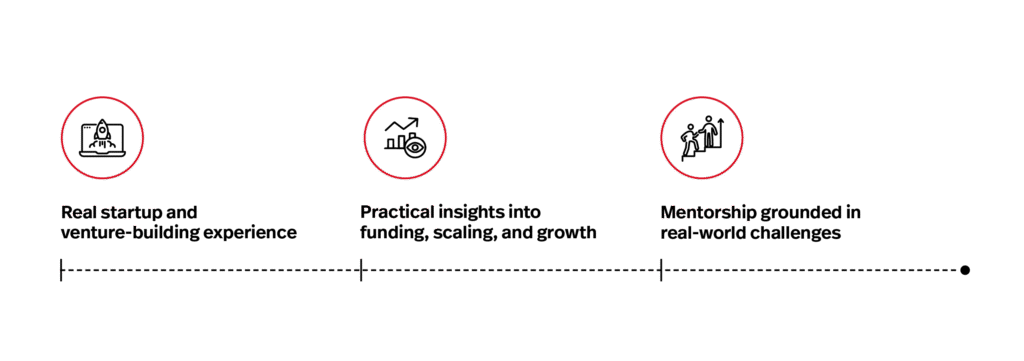
Knowing how to take the first steps toward launching a venture is critical. Gaining practical experience, building a network, and learning to navigate real-world challenges are all part of how to start your entrepreneurial journey. Together, the right combination of coursework, experiential learning, and personal development equips aspiring entrepreneurs to turn ideas into sustainable, impactful ventures.
What degree do you need to be an entrepreneur?
There's no single path to becoming an entrepreneur, but a strong foundation in business can make a meaningful difference. In fact, what to study to become an entrepreneur typically depends on your personalized career goals.
A Business Administration degree provides a strong foundation in finance, marketing, operations, and strategy, all critical areas for starting and growing a business. Whether pursued as an undergraduate program, an MBA, or a Master of Science, it equips students with the knowledge and skills needed to make informed decisions and position ventures for success. Combining an MBA or MS with an Entrepreneurship concentration adds focused training in launching and scaling a business while developing leadership and strategic capabilities:
| Full-Time and Part-Time MBA | Build a comprehensive business foundation while gaining hands-on experience through corporate residencies, co-ops, and venture-focused coursework that prepares you to launch or lead. |
| MS in Management | Develop broad business knowledge while exploring entrepreneurship through electives, experiential projects, and exposure to startup ecosystems. |
| Concentration in Entrepreneurship | Deepen your focus with targeted coursework in venture creation, opportunity validation, and business planning, paired with applied learning opportunities. |
| Graduate Certificate in Entrepreneurship | Gain focused, practical skills in a flexible format designed for those looking to build or refine a venture without pursuing a full degree. |
My coursework at D'Amore-McKim gave me a strong foundation in business and entrepreneurship. I learned essential theories and practical frameworks, and professors provided real-world insights that helped me apply these concepts to structuring a business, creating investor decks, and preparing for pitches.
Dani Zheng, MS in International Management'24
Depending on the type of venture, building upon your undergraduate education can also enhance entrepreneurial readiness:
- Computer Science supports founders creating technology-driven solutions.
- Engineering strengthens skills in product development and innovation.
- Liberal Arts fosters creative problem-solving, communication, and critical thinking for ventures that rely on innovation and unique ideas.
Successful entrepreneurs come from a variety of educational backgrounds. What matters most is gaining the knowledge, skills, and experiences to transform ideas into sustainable ventures. The right combination of degrees for entrepreneurship, specialized coursework, and experiential learning opportunities can help you develop the knowledge, mindset, and network needed to support entrepreneurial growth.
Experience-powered learning: The key to entrepreneurial success
Successful entrepreneurs don't just learn concepts. They test ideas, build networks, and adapt in real time. At D'Amore-McKim, experiential learning is embedded across the entrepreneurial journey, giving you multiple ways to move from idea to execution.
Through the IDEA Student-Led Venture Accelerator, you can develop a venture, test it with real users, and, if it gains traction, launch it with access to funding, mentorship, and operational support. For more personalized guidance, the McCarthy(s) Venture Mentoring Network connects you with experienced entrepreneurs and investors who help you refine your strategy, strengthen your pitch, and navigate early-stage decisions. Inside the classroom, the Entrepreneurship & Innovation faculty offer firsthand startup and investment experience, ensuring your learning is grounded in how ventures actually grow and scale.
I leveraged IDEA's support to launch our startup, SimBus, secure our first round of gap funding, and connect with mentors and peers who offered critical insights and accountability. IDEA helped transform our concept into a real venture, and I continue to run SimBus part-time after graduating in December.
Alex Tian, MS in Management'24
Together, these experiences give you exposure to entrepreneurial operations in startups or established organizations, building leadership skills and practical insights. Experience-powered learning ensures that you're not just studying entrepreneurship. You're actively practicing it, supported by a network of mentors, faculty, and peers who help turn ideas into real business ventures.
Ready to get started?
Ultimately, there's no single answer to “What degree do you need to be an entrepreneur?” There are multiple paths to entrepreneurship and various graduate degrees for entrepreneurship to help you build your skills. And the best path is one that combines education, experience, and support to help you turn ideas into impact. To learn more about how D'Amore-McKim can fuel your journey as an entrepreneur, indicate your interest in one of these programs:

Full-Time MBA
Build an entrepreneurial mindset, future-ready skills, and broad business expertise with Northeastern's experience-powered MBA.

Part-Time MBA
The MBA for working professionals. Prepare to lead in a complex, connected, digital-first economy.

Management
Build your business foundation and explore your interests for real world impact.

Entrepreneurship
Prepare to launch your own business or join an entrepreneurial organization—including venture capital firms, incubators, accelerators, and private banking and service providers.

Entrepreneurship
Build the entrepreneurial skills you need to bring innovative ideas to market, capitalize on breakthrough technologies, and launch your own business.
Take the next step by exploring D'Amore-McKim's programs, attending an info session, or connecting with an advisor to discover how you can turn your ideas into a thriving business.
Key takeaways:
- Entrepreneurs turn vision into impact. As an entrepreneur, you'll combine ideas with business expertise to build ventures and create lasting change.
- Education fuels entrepreneurial success. Degrees for entrepreneurship, including an MBA or MS with an Entrepreneurship concentration, equip you to stand out.
- Experiential learning sets you apart. At schools like The D'Amore-McKim School of Business, you'll apply your skills in real-world settings, venture accelerators, and project-based coursework that help bring ideas to life.
Explore Related Articles



Connect with admissions
Request More Information
Our graduate programs are specifically designed to meet the needs of students and professionals in this fast paced and changing global economy. Sign up to receive more information about the program that interests you most.


