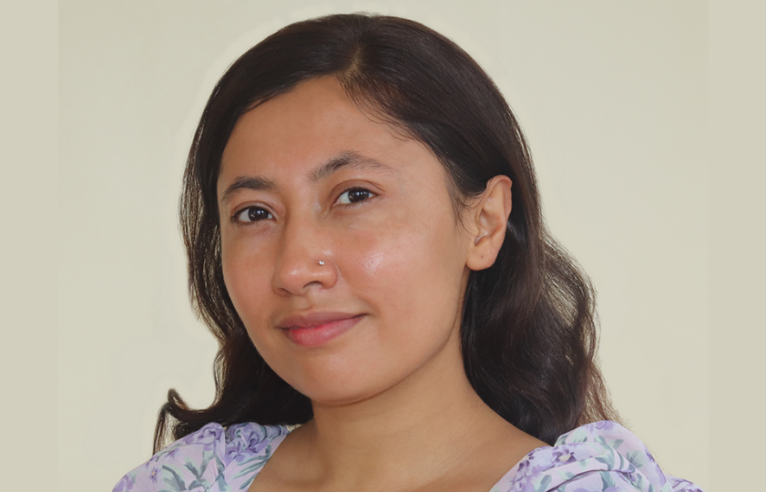
Q: Tell us about your background.
A: I've always been interested in how data can improve business decisions and uncover the story behind them. Leaving China to study in Australia gave me an early appreciation for navigating different perspectives, markets, and ways of thinking. This experience shaped both my academic and professional path. After completing my degrees, I returned to China and spent the next three years in institutional equity sales, advising portfolio managers and institutional investors.
Over time, I became more curious about how the insights I delivered to clients were actually built. That curiosity inspired me to create an AI-powered report generator that transformed complex financial data into client-ready reports. Building that tool showed me the impact analytics can have and made me realize I wanted stronger technical skills, which ultimately guided me toward an MS in Business Analytics.
Q: Why did you choose D'Amore-McKim?
A: I chose D'Amore-McKim's MS in Business Analytics program because it offered the right balance of technical training and real-world application for my career transition. Coming from a background in finance and institutional sales, I wanted to build a solid foundation in analytics and learn how to apply it meaningfully in a business setting.
I wanted more than theory. I wanted to apply my skills to real business challenges, and the curriculum stood out. It's very hands-on with practical experience using tools like Python and Tableau, and there's a strong emphasis on turning complex data into insights that actually support real business decisions.
The experiential learning really stood out, especially the capstone project where everything comes together. Having the opportunity to work with a local company or nonprofit while taking classes made it clear that I'd graduate with practical, hands-on experience I could use right away.
Working directly with companies on real business challenges helps bridge classroom learning and industry application. The Oakland campus location was also a draw because it offers a close‑knit campus experience while keeping me connected to the broader Bay Area and Silicon Valley tech ecosystem.
Q: Tell us about your Community Impact Initiative.
A: Through the Community Impact Initiative, I partnered with an AI cybersecurity platform company on a Product Marketing Analytics team helping prioritize enterprise customers as they prepared to launch a new platform. The team wanted to better understand where sales and marketing efforts could have the most impact.
I built a layered account scoring model that analyzes buying signals to identify high-potential enterprise accounts and guide where the sales and marketing team should focus.
What impacted me the most was seeing how directly my analysis informed real business strategy. It made the impact tangible and showed me exactly how analytics drives decision-making in practice.
Q: How has the Graduate Career Center supported you?
A: The Graduate Career Center has been extremely helpful in many ways. My advisor and I first had in-depth conversations about my background in institutional sales and where I wanted to go next. Together, we mapped out a clear direction in business analytics and identified the gaps I needed to close. This led to the recommendation to pursue the Community Impact Initiative to connect my client-facing experience with hands-on analytics experience.
From there, my advisor helped me better articulate the analytical side of my experience and tailor my resumé for the U.S. job market, highlighting the technical and problem-solving skills that connected naturally to business analytics.
They also supported me with interview preparation, especially in communicating the connection between business and analytics. Overall, it's given me more clarity and confidence as I prepare for roles in data-driven business analytics and strategy consulting.
Q: What advice would you share with future students?
A: Start building your career narrative early. A master's program moves quickly, so it's important to think about your professional goals from the beginning and take advantage of resources like the Graduate Career Center.
Embrace experiential learning opportunities even when it pushes you out of your comfort zone. It's one thing to learn analytics tools in the classroom, but applying those skills to real business problems is what truly builds confidence.
Finally, stay curious. Business analytics is a rapidly evolving field, and a mindset of continuous learning will help you succeed.