


AI is everywhere in today's conversations, but what if instead of just reshaping industries, it could open doors—serving as a bridge, not a barrier—for people reentering the workforce?
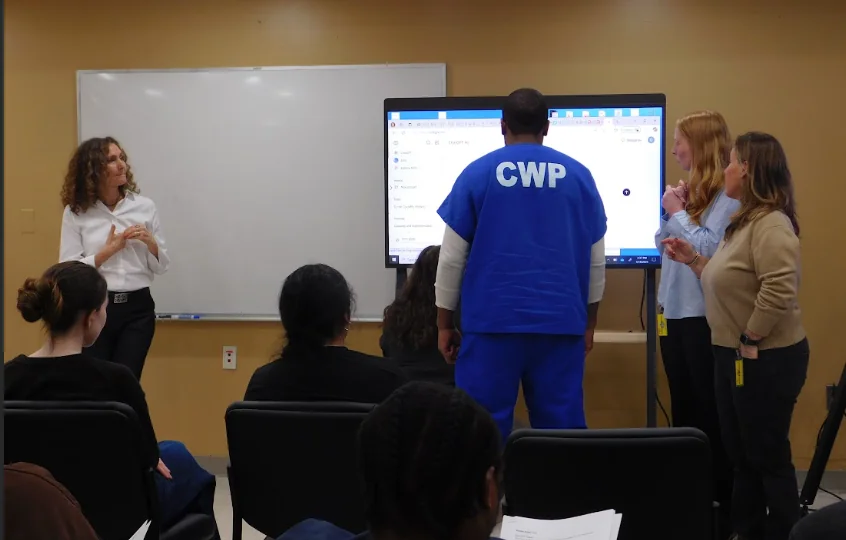
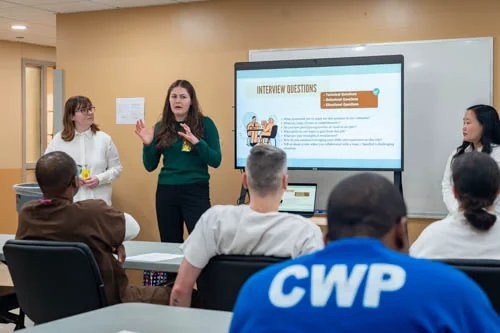
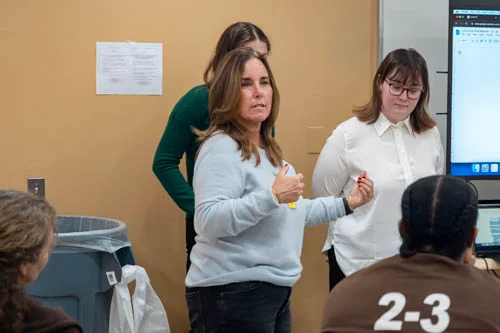
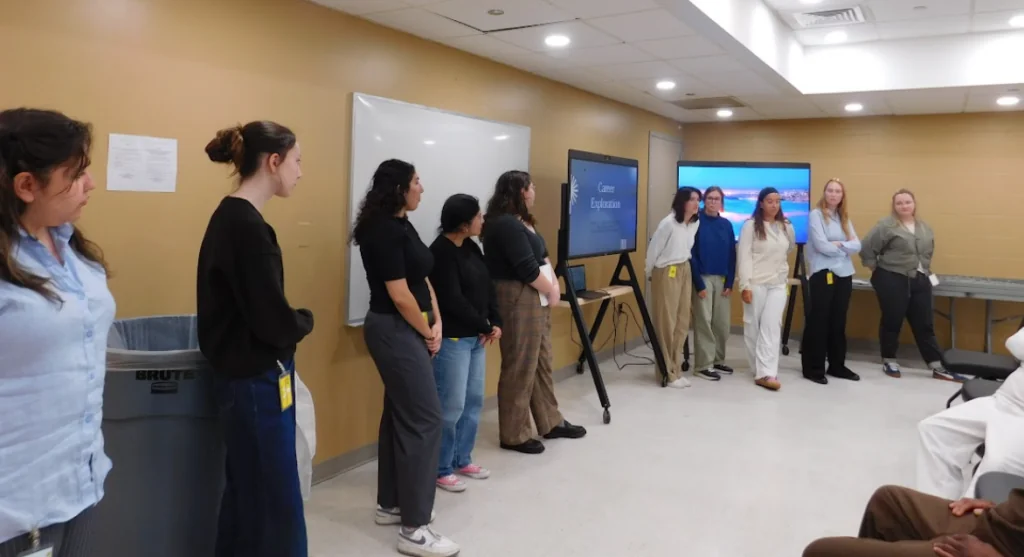
D'Amore-McKim students have been highlighted for leading career workshops inside the Suffolk County House of Correction in the South Bay neighborhood of Boston, transforming a classroom into a space for co-learning, dignity, and tangible next steps.
Today, that same program is evolving with generative AI now embedded across resume building, interview prep, and entrepreneurship, to make “second chances” more actionable and more equitable.
Why this matters now
Every year, more than 600,000 people leave U.S. prisons and try to restart their lives. The data is sobering; historically, roughly two-thirds are rearrested within three years, and return-to-prison rates have hovered around 39–50% depending on circumstances. Employment is one of the strongest buffers against recidivism. (ASPE, Bureau of Justice Statistics, CCJ)
For those who secure steady work, outcomes improve dramatically. Forbes cites a 16% three-year recidivism rate for people employed for a full year post-release, versus 52% for those without sustained employment. That hefty margin is the difference between a revolving door and a real reset. (Forbes)
The nature of work itself is also undergoing a shift. Many entry-level or transitional roles that returning citizens have historically relied on — from warehouse shifts to customer service — are being reshaped or replaced by automation and AI. That means the pathways that once offered stability may not exist in the same way tomorrow. Preparing people to work with AI, rather than being displaced by it, is critical to future-proofing reentry.
The Prison Project began as faculty-led virtual workshops during the pandemic and quickly turned into student-led sessions that powered second chances. Building on that foundation, this AI for Good initiative adds learning about practical, low-friction uses of generative AI at key moments in the reentry journey, including:
- Career exploration & resumes: Participants use tools like ChatGPT to clarify strengths and translate lived experiences into bullet points that pass automated screens.
- Interview practice: AI-simulated questions help people rehearse narrative answers and get instant feedback, boosting confidence before the real thing.
- Entrepreneurship: For those drawn to self-employment, AI supports early market research, lean business-plan outlines, and pitch drafts.
The feedback is honest and motivating. “Learning how to use ChatGPT and incorporate it into my business plan was huge.” Another participant reflected, “The whole experience (using AI) was new to me. It was amazing how much it could do with so little information.” That same participant—using AI for the first time—ended up prototyping a logo for their athletic wear concept: A small step that made a big idea feel closer.
Students feel the shift, too: seeing AI for the first time through someone else's eyes is a powerful reminder of the digital divide, and the responsibility to design tech access that's inclusive by default.
“The engagement and interest were so evident in the hands of participation and inquisitiveness of the individuals attending. I brought my laptop, and one of the (incarcerated individuals) spent a lot of the session working on his future brand logo on ChatGPT. I loved not only showing him the tool, but seeing how his creativity shone through and seeing him flourish,” says Anjali Aggarwal, DMSB'25.

D'Amore-McKim's distinctive approach
This program is rooted in a long-running Northeastern initiative at South Bay, where co-op advisers and students have consistently demonstrated their support for career design among individuals preparing to reenter the community. There's a clear focus on moments where AI adds agency, such as clarifying skills, shaping narratives, and practicing interviews, rather than replacing human connection. That's also why workshops begin with affirmations about growth and self-worth; the tech is a tool for improvement, not the main project. By turning the classroom outward, D'Amore-McKim students develop judgment, communication, and cross-cultural fluency —precisely the capabilities business leaders require in an AI-enabled economy.
Participants leave with stronger resumes, sharper interview skills, and clear next steps—tangible momentum paired with renewed belief in their futures. Program leaders Michelle Zaff and Jen Guillemen describe it as a turning point:
“Bringing generative AI tools into the jail this year was a game-changer. For the first time, incarcerated individuals could draft resumes, prepare for interviews, and bring their entrepreneurial visions to life. Watching someone light up as they generated a logo and business plan for their future clothing line right there in the jail classroom was powerful. It gave them a sense of possibility, dignity, and agency,” says Gullemen.
The Prison Project demonstrates that introducing AI literacy and career tools within correctional facilities opens doors that are often closed by cost, credentials, or connectivity. Students describe the experience as “eye-opening” and consistently request additional sessions—a clear indication that service and learning complement each other.
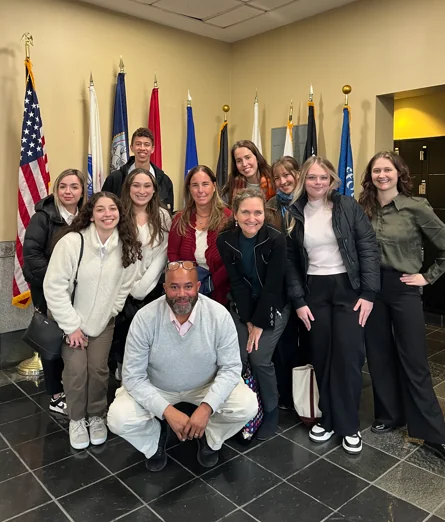
At D'Amore-McKim, our approach is simple and scalable: teach the fundamentals of career design, then use AI to extend their reach. That's AI for Good in action.
“At the D'Amore-McKim School of Business AI Strategic Hub (DASH), listening to communities and providing tools that meet their needs is core to our mission,” says Director Kwong Chan. “We are proud to support the Prison Project and ensure that all members of society gain awareness of AI, preparing every generation and sector for the future.”